
ANETA ŠAFEROVÁ, PHOTO: JAN BEROUNSKÝ
January 2026
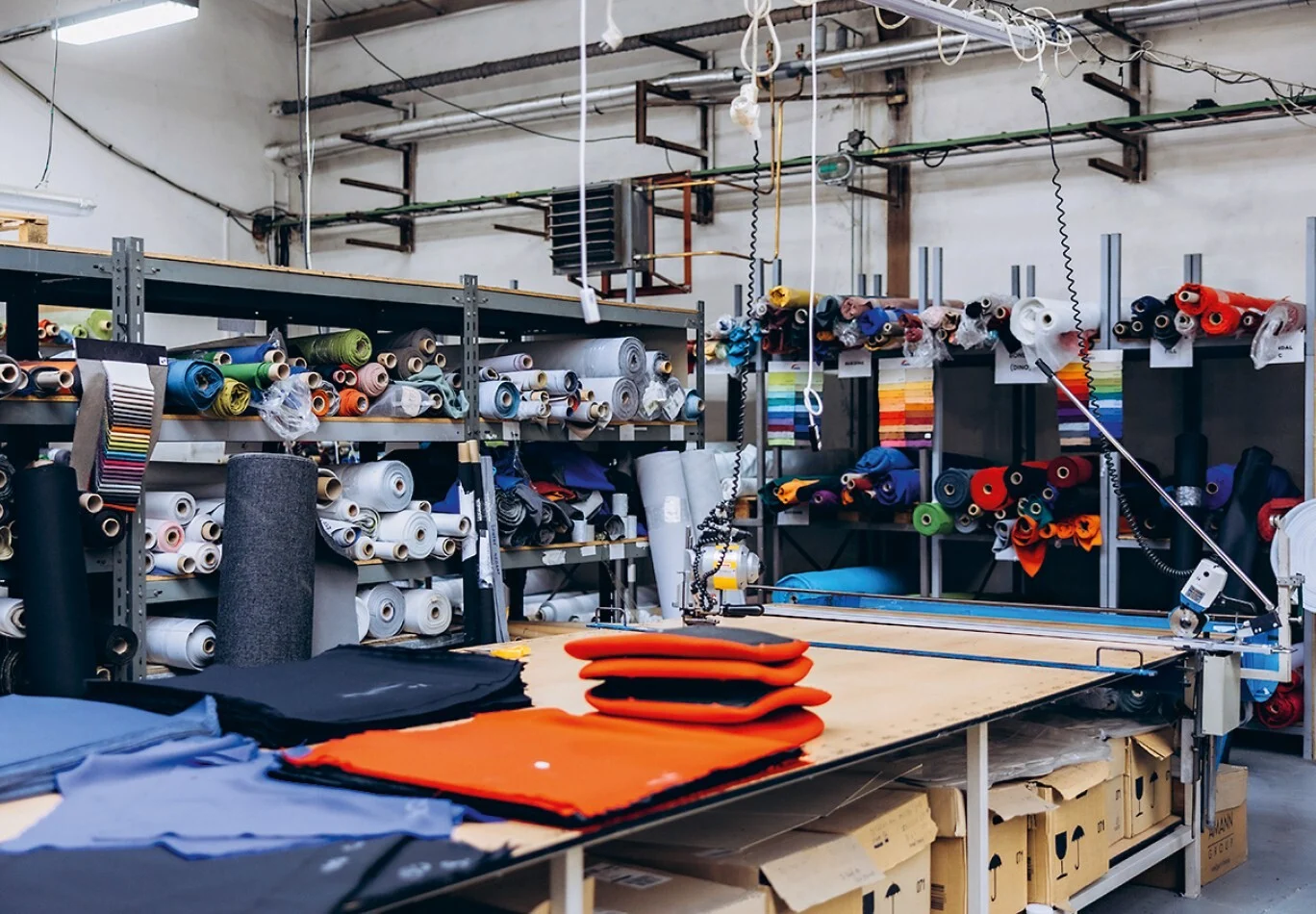
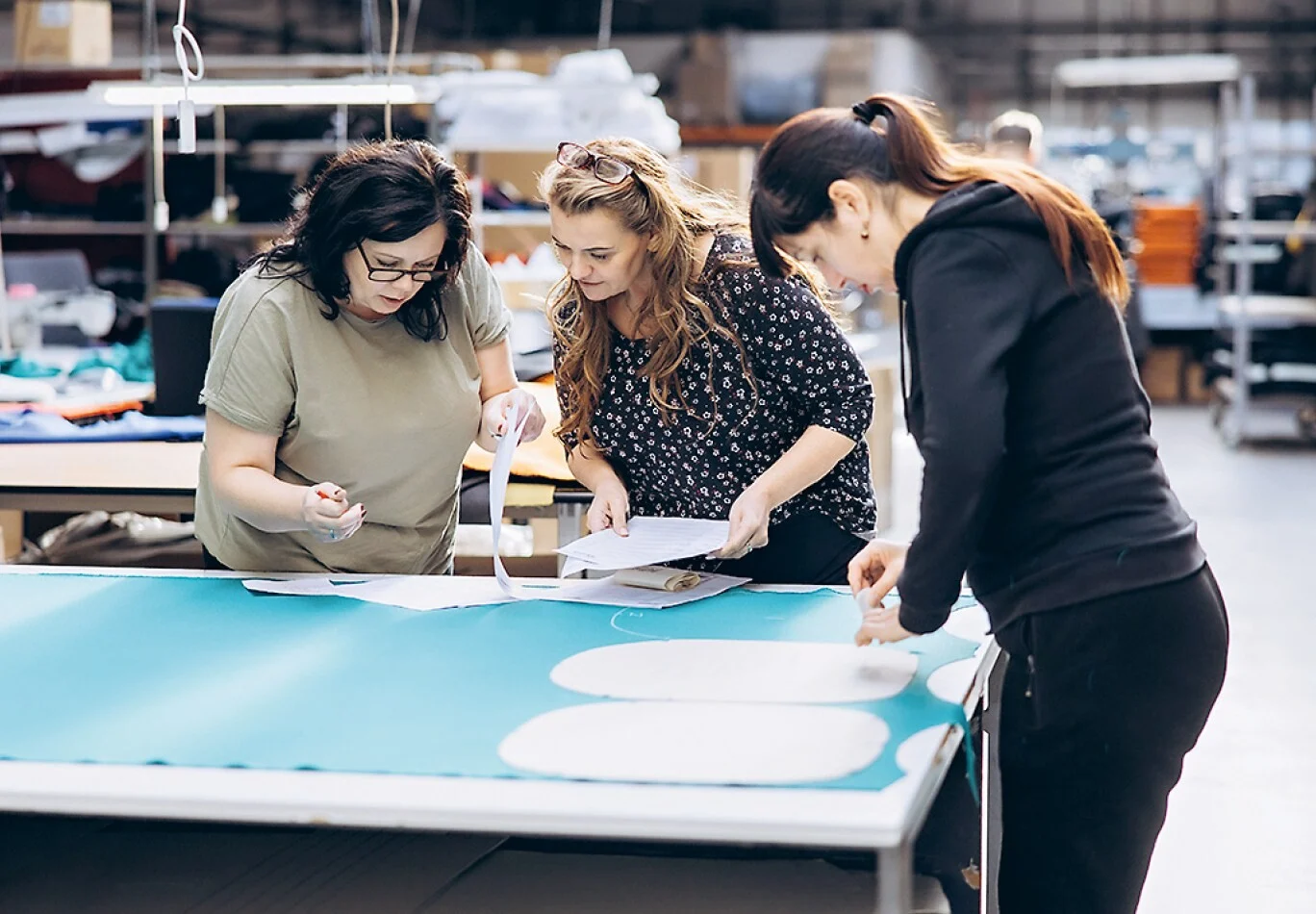
Sharp shears bite into heavy fabric as skilled hands cut precise silhouettes. These forms are then meticulously upholstered over soft cushioning, while others assemble backrests and five-star bases. One would hardly guess the sheer volume of manual craftsmanship hidden behind something as ubiquitous as an office chair. Here in Škvorec, near Prague—and across several other facilities we shall explore—120,000 units are produced annually. Given their dominance in the domestic market, you likely encounter them at every turn.
They are the seats of choice for government ministries and Prague Castle; they support broadcasters at Czech Television and civil servants at the Post Office. They are utilised by the armed forces and firefighters planning rescue missions, as well as by students and professors across the nation’s universities. Elsewhere, their tandem seating provides a brief respite for passengers at international airports and patients in major teaching hospitals.
“We certainly hold half of the Czech supply market; the rest is shared among other manufacturers. We don’t let much foreign competition in,” says Milan Laube, who founded the family firm Alba CR exactly thirty years ago.
In three decades, he has built an enterprise with a turnover exceeding £10 million (300m CZK), employing 120 people and maintaining steady growth—climbing by 12% this year alone. Yet, Laube prefers to talk about people rather than balance sheets. “When relationships are right, financial success follows naturally,” explains the 58-year-old entrepreneur, whose presence radiates humility, understatedness, and a deep-seated respect for his staff.
He prides himself on long-term loyalty; many of his team have been with him since the beginning. Laube ventured into business during the “Wild Nineties.” Immediately after the revolution, he travelled abroad, hungry for experience and driven by youthful ambition.
After working in the hospitality sectors of Germany and Austria, he began selling office furniture alongside a partner. In the early days of capitalism, demand was voracious. “I always had a dream of doing something on my own. I didn’t want to just be a middleman; I craved a manufacturing company I could build from the ground up,” he recalls.
Despite having no formal training as an upholsterer or carpenter, he dove into the production of the one thing he knew best: chairs. He rented a workshop, gathered a few friends, and started from zero.
“We truly didn’t have a clue at first. It was a journey of discovery. We would visit the subcontractors we used to buy from just to observe how a production line actually functioned. We started with the simplest models and gradually expanded our repertoire,” Laube explains.
Today, the portfolio spans office, conference, and task chairs, alongside specialised medical seating, ergonomic furniture for children, and heavy-duty 24/7 seating for call centres and dispatch hubs. They even produce designer pieces for kitchens, terraces, and the hospitality sector.
“We handle bespoke, atypical requests without issue—in fact, we enjoy them,” Laube says. Just a year after launching, he made the bold move to open a second facility in Ostrava to service the eastern markets.
“At the time, it seemed a bit mad, but I’ve always believed that locals should look after locals. Today, that looks like a masterstroke of strategy. Logistics costs have soared, and having our own fleet and regional hubs means we aren’t bled dry by the cost of long-haul transport from Prague.”
In Ostrava, Alba also manufactures its own polyurethane components. A pivotal moment came in 2001 with the purchase of the Škvorec site. “It was the first time I took out a loan. I was captivated by the site—it was love at first sight. I saw the potential of owning our own space; the scale allowed us to truly expand.”
Following this philosophy of regional presence, Laube established a production site in Bučany, Slovakia, strategically located near major distribution hubs. The latest addition to the empire is a dedicated upholstery division opened in 2022 in Letohrad, which focuses on sofas and lounge seating for receptions and hotels.
Alba operates an indirect sales model, moving products exclusively through a network of over a thousand distributors—ranging from interior design studios and fit-out firms to major furniture retailers and e-commerce platforms.
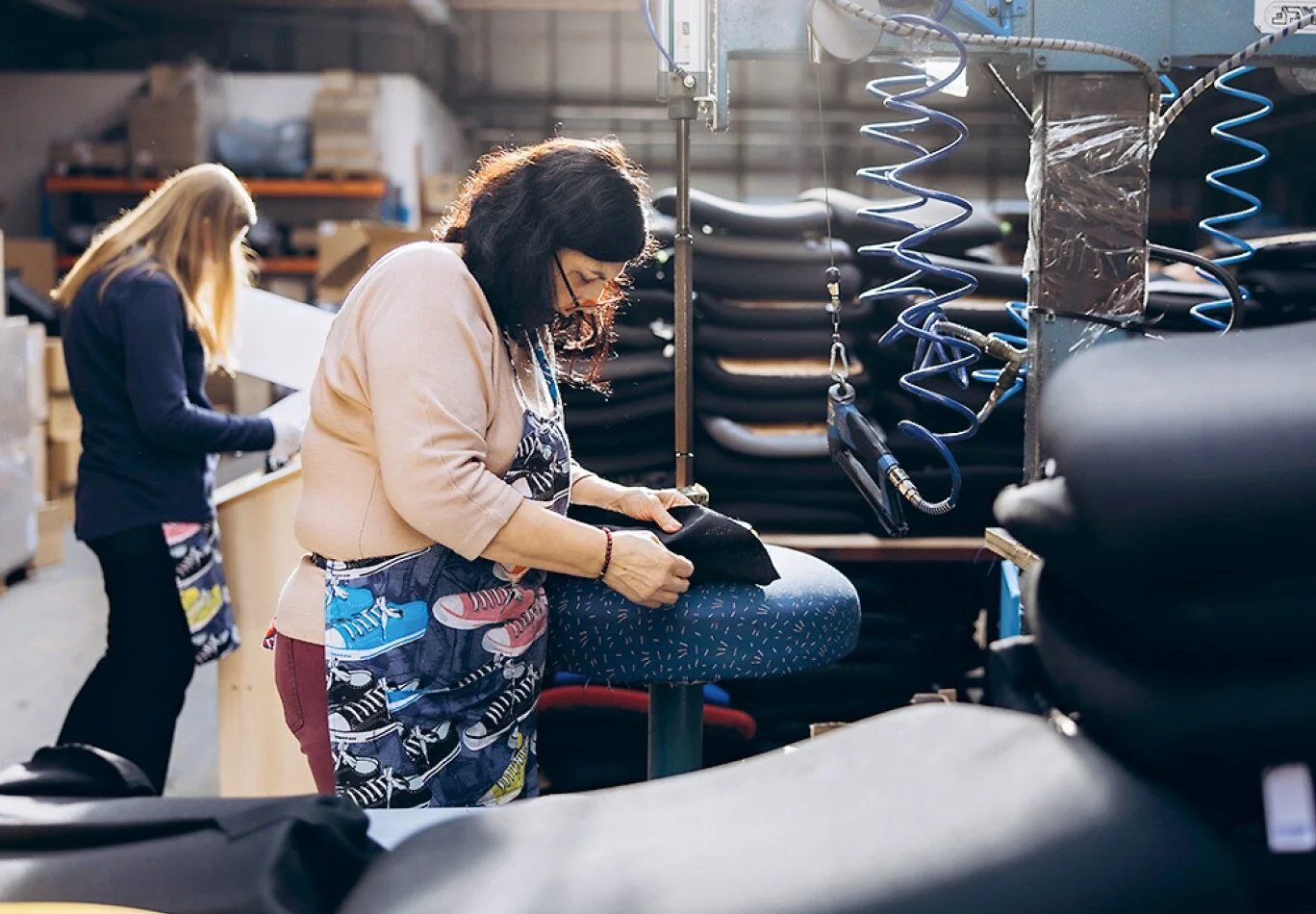
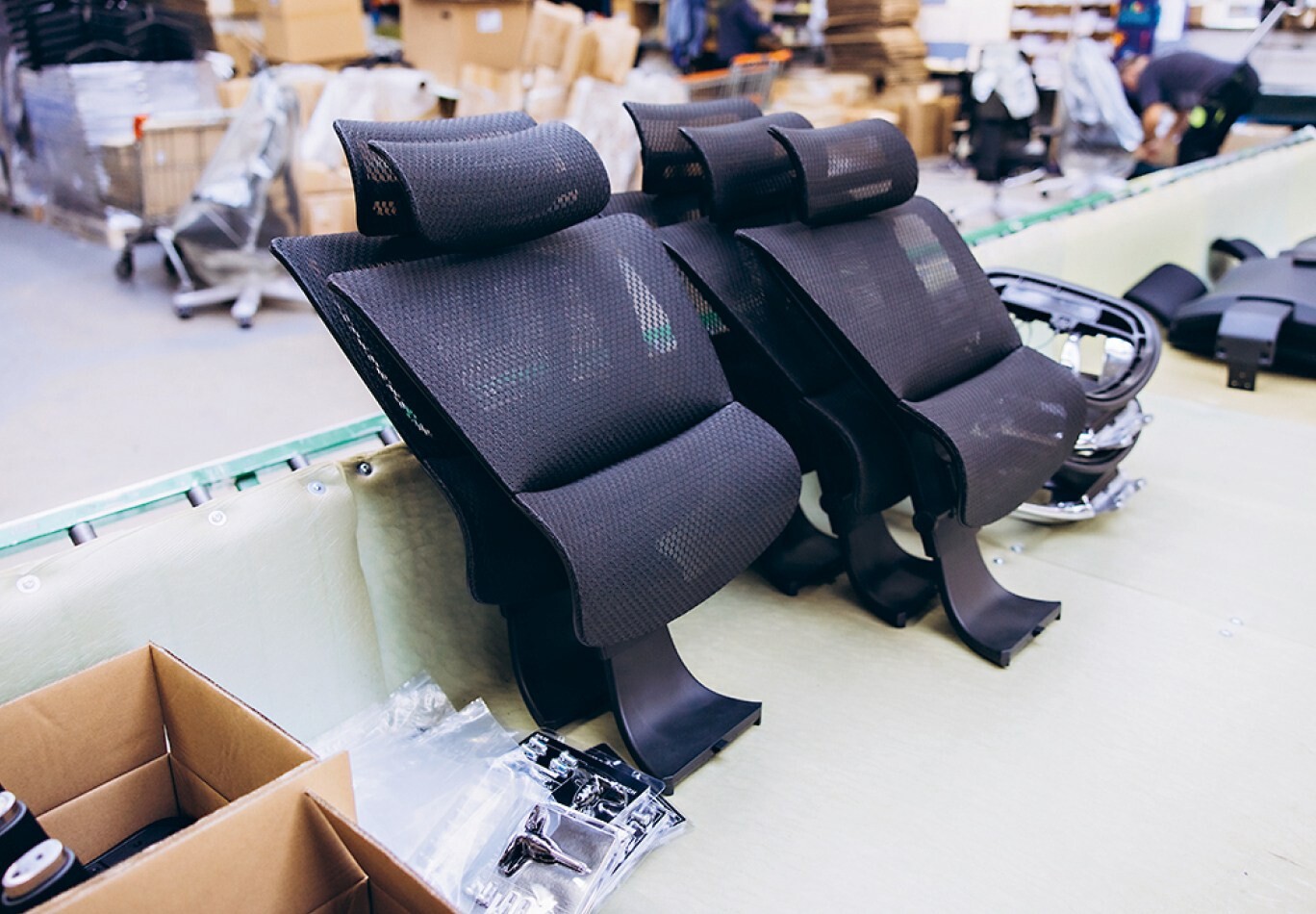
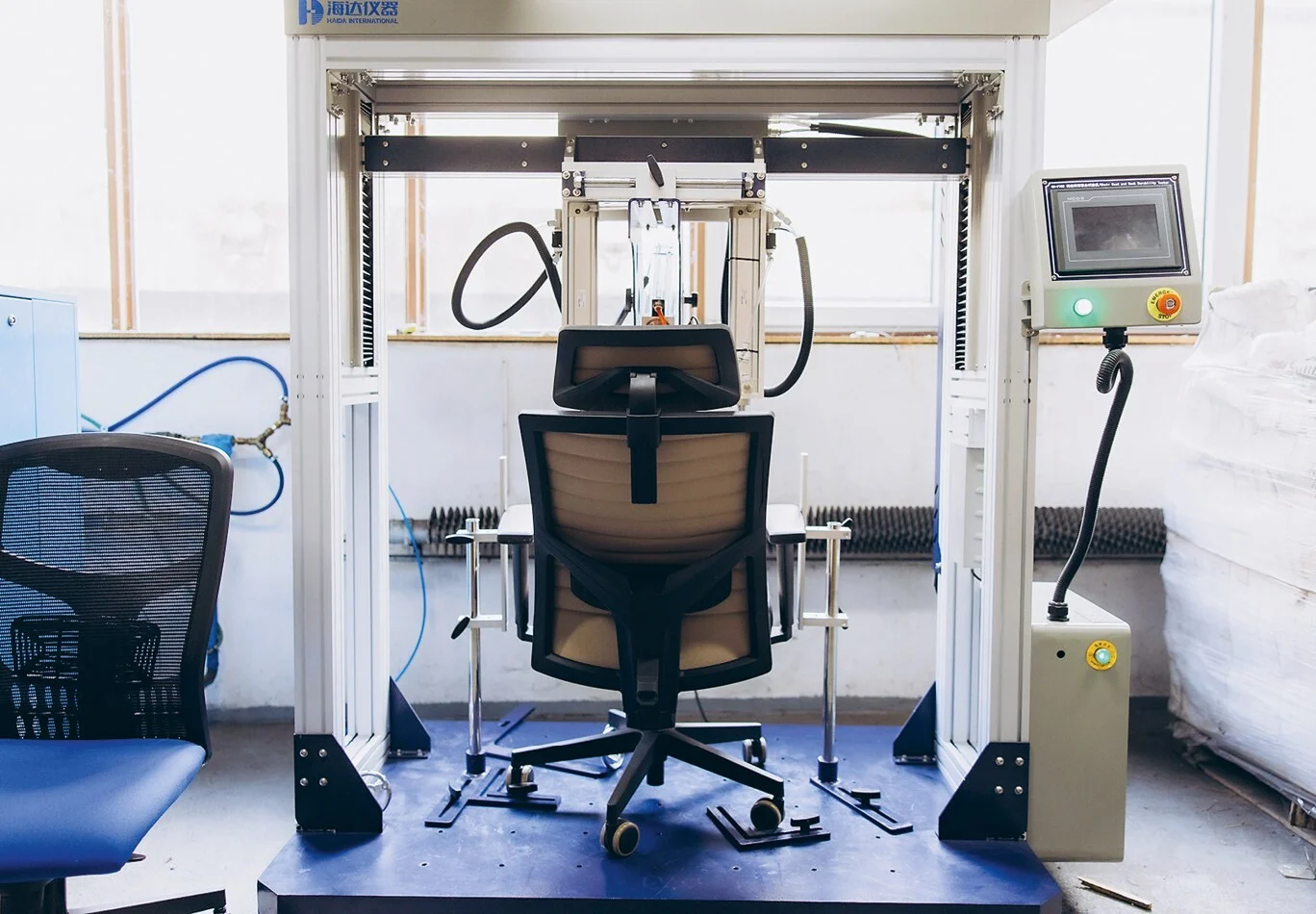
Pleasant winter sunlight streams through the skylights into the traditional factory hall. The warmth, however, is more than just atmospheric; it is powered by a sophisticated array of solar panels. For many here, this stable, well-invested environment is precisely why they choose to stay at Alba.
“It is especially valued by employees who previously worked on-site or had to commute long distances. Here, they have regular hours, a fixed place of work, and we even arrange for lunch deliveries. There is a palpable family atmosphere,” Milan Laube explains as we walk between workstations and racks of fabrics in a kaleidoscope of materials and colours.
Rows of seat cushions await assembly, the vast majority of them in black. “Our customers’ preferences are quite clear,” the owner says with a smile, greeting everyone he passes. He has known many of his staff for over 20 years; staff turnover at Alba is remarkably low, and finding skilled craftspeople is rarely an issue.
“After the Czech textile industry was hit hard by competition from China and India, many skilled seamstresses became available. We have no trouble recruiting upholsterers either, though both professions tend to attract an older demographic—the younger generation isn’t as drawn to these crafts. Carpentry, on the other hand, seems to hold more appeal for the youth,” he explains as we enter the small woodworking shop where sofa frames and wooden chair components are crafted.
This “family atmosphere” is no mere marketing slogan. Soon after founding the company, Milan was joined by his father, František Laube.
“I enjoyed building the business, but I was never one for the paperwork. I needed a solid foundation to ensure everything was above board with the authorities. My father was the perfect person for that. Unlike me, he had the patience for the numbers and kept everything in impeccable order. And in this business, the audits are relentless,” Milan notes, recalling a critical moment.
“When our boiler room caught fire, the insurance company immediately went through every logbook and document, looking for a reason not to pay out. My father had everything in perfect order—in naprostém rychtyku, as we say. When you hire family, you hire absolute trust.”
The firm’s future remains firmly in family hands. For the past eight years, the owner’s 28-year-old daughter, Sabina—who took the surname den Brinker following her marriage to her Dutch husband—has been a key pillar of the business. The company was the backdrop to her childhood; she and her two siblings were a regular fixture in the factory from an early age.
“All our children, and the children of our relatives, have spent time on the shop floor to learn the value of manual labour. There is plenty to do, from assembling chairs—which is relatively straightforward—to unpacking components or cutting fabric. These are essential roles that anyone can learn,” Milan states.
Sabina remembers those days fondly. “I remember being about fifteen and working on a specific sofa where buttons had to be sewn into the seat with a large needle. You had to force it through the foam with real strength. I ended up with blisters from those buttons,” she laughs.
Her path into the family business wasn’t always a given. “Originally, I wanted to be a vet because I’m a huge dog lover. But during sixth form, I realised that loving animals didn’t necessarily mean I had to work with them,” admits the elegant young woman, who possesses a self-assurance and decisiveness that belies her years.
Her entrepreneurial streak appeared early. At eighteen, while her classmates were on their lunch breaks, Sabina was running her own wholesale business for hotel and restaurant hygiene supplies, attending client meetings between lessons. After she and her partner at the time parted ways, she pivoted to launch a professional dog-walking and pet-sitting agency.
“She even wanted to build a dog park here on the factory grounds,” her father adds with a smile. “That idea eventually fell through, but it had its benefits—it forced us to clear out all the construction debris behind the hall. Now we have a beautiful lawn we can actually mow. We’ve always supported our children’s ambitions.”
Sabina balanced these ventures while studying Finance at the Prague University of Economics and Business, all while helping out at Alba. Over the course of two years, she completed a rigorous “rotation” through the firm, gaining hands-on experience in every department: from sales, invoicing, and logistics to production planning, procurement, and accounting.
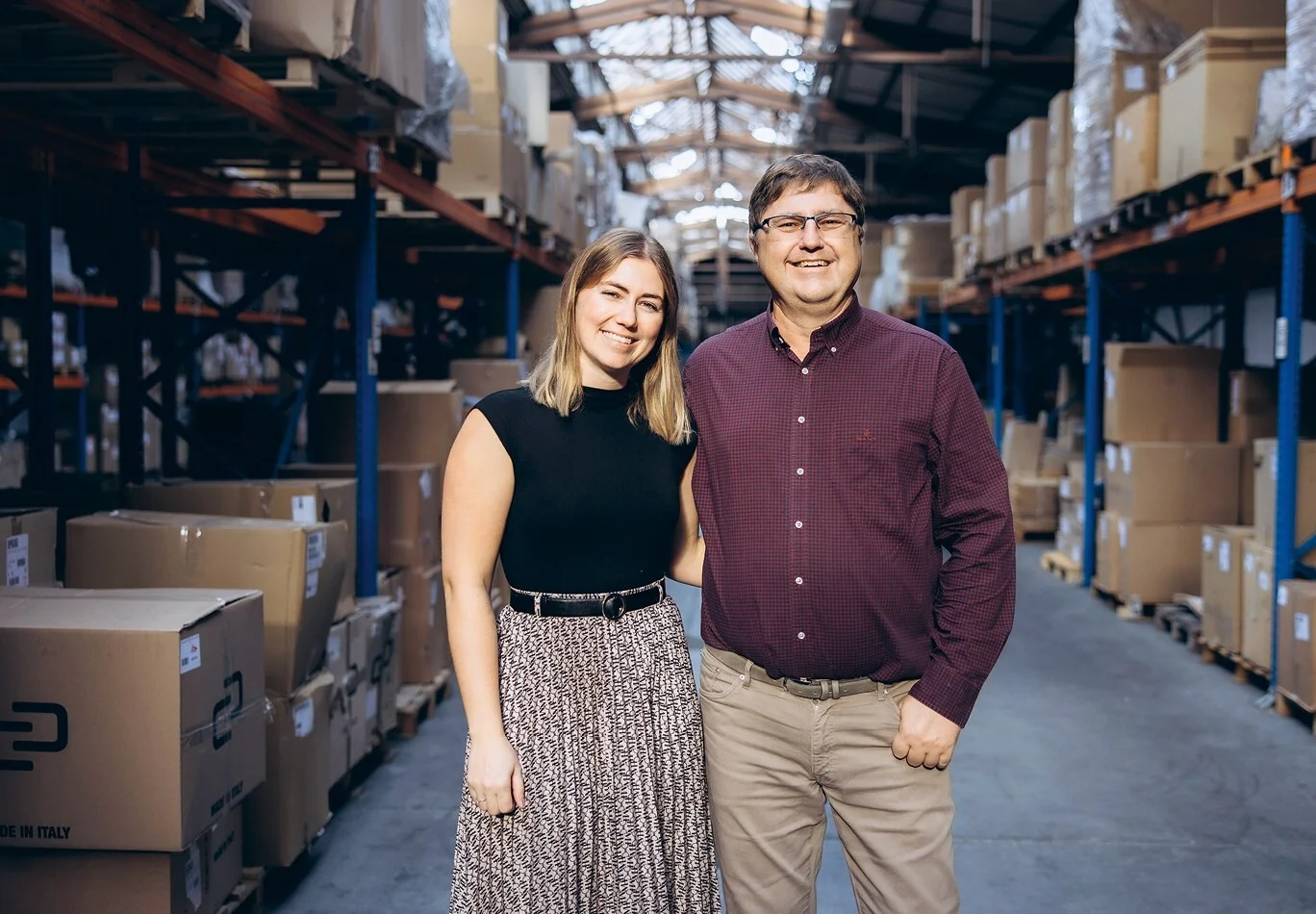
She admits that as the owner’s daughter, she had to earn her standing among the employees and prove she wasn’t there simply through nepotism. She grew to love the work and decided to join the company full-time after university. The original plan was for her to gradually take over the role of Chief Financial Officer from her grandfather.
“However, even at 84, my grandfather remains incredibly active; he commutes across Prague to the office four times a week—the company keeps him in great shape. He would have loved to be here with us today, but he is recovering from major heart surgery. Even so, he stays in touch, managing the accounts department and approving payments remotely,” Sabina says with a smile.
In the meantime, she threw herself into developing international trade—an area that had previously lacked systematic attention, with only three per cent of production heading abroad.
“I started with the German-speaking markets because we already had a few customers in Germany. I had to research how the local business environment operated and tested several expansion methods. Ultimately, setting up a branch in Germany proved successful, especially since we hired a German sales representative rather than a Czech one. He has been there for just under two years, and demand is growing,” explains Sabina, who recently managed to open a showroom in London with one of their business partners. Under her leadership, exports have climbed to ten per cent of revenue—a move she considers a significant step for Alba into the ranks of European players.
“Investing in a rebranding was a huge help. I knew that we wouldn’t succeed in Western markets with our old website and logo. Our new visual identity, logo, and presentation are garnering interest from various countries without us even targeting them. It was a crucial move that is really paying off,” reveals Sabina, who is now a Managing Director of the company alongside her father.
Her role as Head of Export is shifting toward business development, implementing new processes, digitalisation, and strategy. She is particularly proud of the ‘Alba Configurator’ service, which they launched during the pandemic. It allows distributors and customers to customise chair specifications and generate a commercial quote in just a few clicks.
“No one else on the market has a tool this sophisticated,” Sabina adds.
As is typical of family-run businesses, the lines between personal and professional life are constantly blurred, which can sometimes present a challenge. Milan Laube maintains a clear stance on this. “Even as the owner of the company, I always respected my father as an authority; I looked up to him and never openly went against him. If he disagreed with something I wanted to achieve, I simply didn’t do it. We always had to reach a consensus,” he explains.
“None of us has a monopoly on wisdom. It is better to make important decisions collectively and consult with friends or those close to you. This has always worked for us,” says Milan Laube, who applies the same principle to his daughter.
“Logically, we reached the conclusion that, given her education and linguistic skills, she would take charge of exports. I must take my hat off to her; she has done a tremendous amount of work and understood things that I perhaps didn’t grasp until then. Our collaboration is running brilliantly,” he says with appreciation.
At the same time, he notes that good relationships begin in childhood. At the start of his business journey, when he was under extreme time pressure, he made a vow to strictly separate his private and professional lives.
“I did it mainly for my own sake, because I knew that if my brain was constantly running, I wouldn’t rest and I wouldn’t be productive. I learned that when I got into the car and turned the key, I left work behind and thought of my family. I thought of little Sabina, who would always run out to greet me,” describes Laube, who also used adrenaline to let off steam.
More than once, he would pack his paraglider immediately after work and head to the Central Bohemian Uplands to fly. “It cleared my mind perfectly,” he admits. He maintains that boundary between work and privacy to this day, even though modern technology would allow him to be connected to the company around the clock.
“My colleagues know not to trouble me with problems in the evening or early morning. However, it must be noted that we have excellent and responsible professionals in key positions who can resolve crises without us.” Sabina shares a similar outlook.
“As a child, I knew Alba existed, but it was never something that intruded upon our family gatherings. My father worked hard, but when he came home, he was devoted to us. He taught us to ride bikes, to ski, and we travelled the world together. And that is how it remains to this day.”
“We discuss work in the office so as not to involve family members who don’t need to hear it or aren’t as interested. In a family setting, we focus on family; in a professional setting, we focus on work,” she explains, noting that the entire family still goes on holiday together at least once a year.
Over 30 years in business, Milan Laube’s core values have crystallised, and Sabina says she is in complete alignment with them.
“We are both straightforward; we don’t beat around the bush and we strive to speak openly. We place trust in our people so they feel empowered to solve problems. Communication is fundamental—we have to reach a consensus, agree on things, and involve people in the decision-making process. And whatever we promise, whether to our employees or our customers, we keep. Even if it means taking a loss,” Laube emphasises.
Both struggle to recall a moment of significant conflict between them. “Neither of us acts on emotion; we strive to remain rational,” Sabina explains.
Her father adds: “I am not the kind of person who doesn’t listen. I don’t make hasty decisions without hearing the full picture. Sabina has the opportunity to present her arguments and back them up with input from anyone in the company. Naturally, I have the final word, but it only comes after a proper debate.”
Sabina agrees that this quality is perhaps the reason for their seamless collaboration. “At the Family Business Club meetings at the University of Economics, I meet with successors of other family firms and hear many stories about how things work elsewhere. It isn’t always like it is here. I am very fortunate that my father wants me here, respects me, listens to me, and isn’t so conservative that he only pushes for established solutions.”
Milan Laube admits, however, that in the early days, he had to temper her ambitions. “She arrived from university full of enthusiasm, as is often the case, and began pushing a vast amount of information my way. I didn’t allow her to implement every change at once; I told her to pick two and focus on those first.”
“People are naturally conservative; they dislike change, and moving too fast would have completely disrupted the company. You have to guide employees gently and gradually show them the future benefits of a change so they can truly embrace it,” says the seasoned CEO, who nonetheless remains entirely open to the perspectives of the younger generation.
“I only have a few years left until retirement, and I am well aware that the things we were taught in school are long obsolete. I am open to everything Sabina tells me and explains to me. In fact, I want her to explain it. I don’t recall ever telling her, ‘That’s nonsense.’ I listen to her, and then, using my authority, I might support her in front of colleagues during a meeting. In our firm, the experience of the older generation combined with the drive of the younger one certainly pays dividends.”